Measures to help curb the spread of COVID-19 in Uganda – such as restrictions on movement – don’t seem to have deterred the illegal international wildlife trade. The demand for both traditional wildlife products (such as pangolin scales) and emerging ones (such as elephant penises) has continued as evidenced in recent arrests.
There’s been an increase in poaching in Queen Elizabeth National Park, Uganda’s top wildlife reserve, with 60 poachers arrested between March and May 2020. In June, after nine years of no poaching of the endangered silverback gorillas, one was killed by four poachers in the Bwindi Impenetrable National Park.
In May fourteen Chinese nationals were arrested in Uganda in possession of 10 elephant penises worth over US$4.5 million, six tortoises, and half a kilogram of pangolin scales, together worth an estimated US$8 000.
There remain around 5 000 elephants in Uganda. As with tiger, elephant penis is both a high-end delicacy and an ingredient for traditional medicine in Asian countries. All eight pangolin species in the world are on the decline or on the verge of extinction, and four of these are native to Africa.
These illegal wildlife products, such as the elephant penises were stockpiled by the poachers and were en route to international destination markets before being seized by the Ugandan authorities. With restrictions in movement imposed due to COVID-19 questions of how this cache of wildlife products is moving from Uganda to its destination markets needs to be asked, urgently.
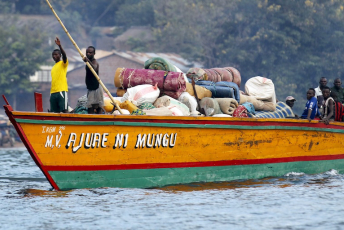
In addition to being a source country, Uganda is also a transit node and a regional logistical hub for the trade in illegal wildlife from Central African, mostly the DRC’s Garamba National Park. Despite regulations for passenger travel due to COVID-19, cargo services from Uganda’s air and sea ports are working. High-end products such as rhino horn are airlifted as cargo while bulk commodities like fish, python skins and hippopotamus teeth are shipped out of Uganda through the country’s ports on Lake Victoria. These commodities are transported through Kenya and on to end destination countries.
Jacqueline Cochrane, a communications specialist on wildlife crime with the Global Initiative Against Transnational Organized Crime, says even with greater surveillance on wildlife trafficking, lockdown measures have meant fewer staff at ports and borders, making these borders more porous.
Asia’s massive appetite for Africa’s wildlife has ensured that this illegal trade has continued unabated – even during the pandemic’s lockdowns. With wet markets in China believed to be the origin of the transmission of COVID-19, the Chinese government has taken steps to change its wildlife trade policy. Key among these has been the Chinese Parliament’s decision in February to ban the eating of wildlife, but allowing it to be used for other purposes such as traditional medicine. This is an ambiguous ban considering that the consumption of wildlife is often part of tapping into its purported medicinal benefits.
The United Nations (UN) Environment Programme reports that 70% of all emerging infectious diseases, including COVID-19, are zoonotic – meaning that they originate when pathogens move from animals to humans. In response to the pandemic, the World Health Organization (WHO) has highlighted the importance of enforcing bans on the sale of wildlife for food.
Despite the postponement of the UN Congress on Crime Prevention and Criminal Justice, which was to take place in April, the environmental and policy community have also echoed the WHO position calling for wider bans on wildlife markets.
Addressing international wildlife trafficking in Uganda must take place at the national level, with the support of both the regional and international community in criminalising the trade and halting the demand for such products. Here Uganda’s newly established National Wildlife Crime Coordination Task Force is well placed to strengthen the capacity of different law enforcement agencies such as the wildlife and customs to proactively coordinate their efforts in disrupting the illegal wildlife trade, this awareness and coordinate would be enhance by efforts to include the the judiciary.
Regional and international efforts are championed by Kenya and the United States, who are advocating for a total ban on illegal international wildlife trade in all its forms. This includes for consumption, medicine and pets, among others.
Uganda’s national approach would be bolstered where it complements and supports these international efforts. Thus, increased coordination and information sharing across countries in the region is a critical element to disrupting such trade. Existing forums could serve as the starting point for harmonising response mechanisms, policies and strategies across the East African Community.
Mohamed Daghar, Researcher, ENACT project, ISS